Tech Twitter and Nextdoor Couldn't Feel More Different. But They Share the Same Trust Problem.
Two very different communities, one shared failure mode: when promotion and trust collapse into each other, nobody wins.
Most moderation systems still analyze online content as if every interaction exists in isolation. Real communities don't work that way.
We recently ran two very different conversations through Vibecheck: an X thread about the AI meeting-notes app Granola, and a Nextdoor thread about solar panel installers.
At first glance, neither looked particularly risky. No obvious scam language. No explicit harassment. No clear policy violation.
But both became surprisingly difficult to interpret once community context started accumulating.
A wave of highly positive recommendations inside startup Twitter.
The Granola thread started with a well-known founder posting that he had gotten "more thanks" for recommending Granola than any other app.
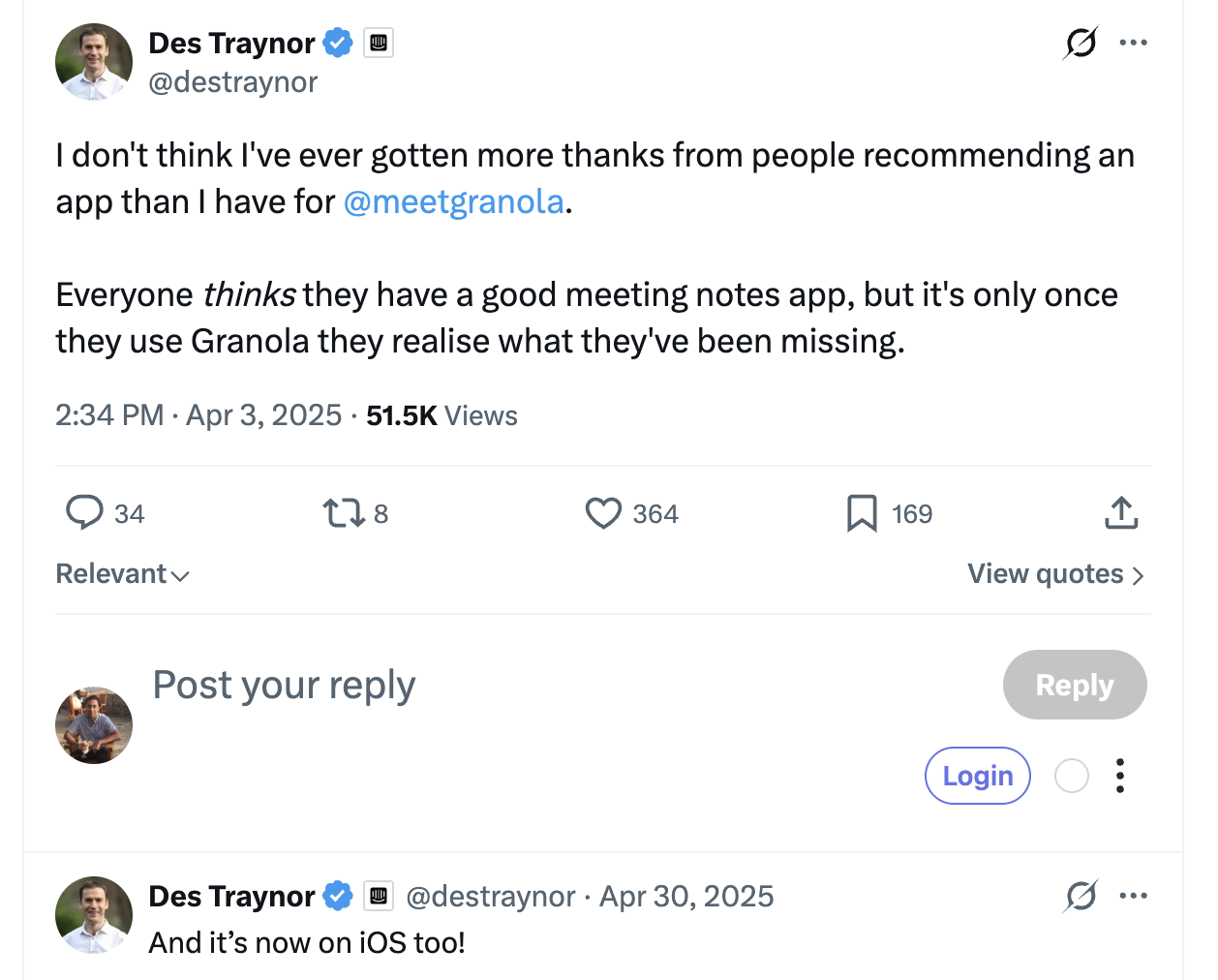
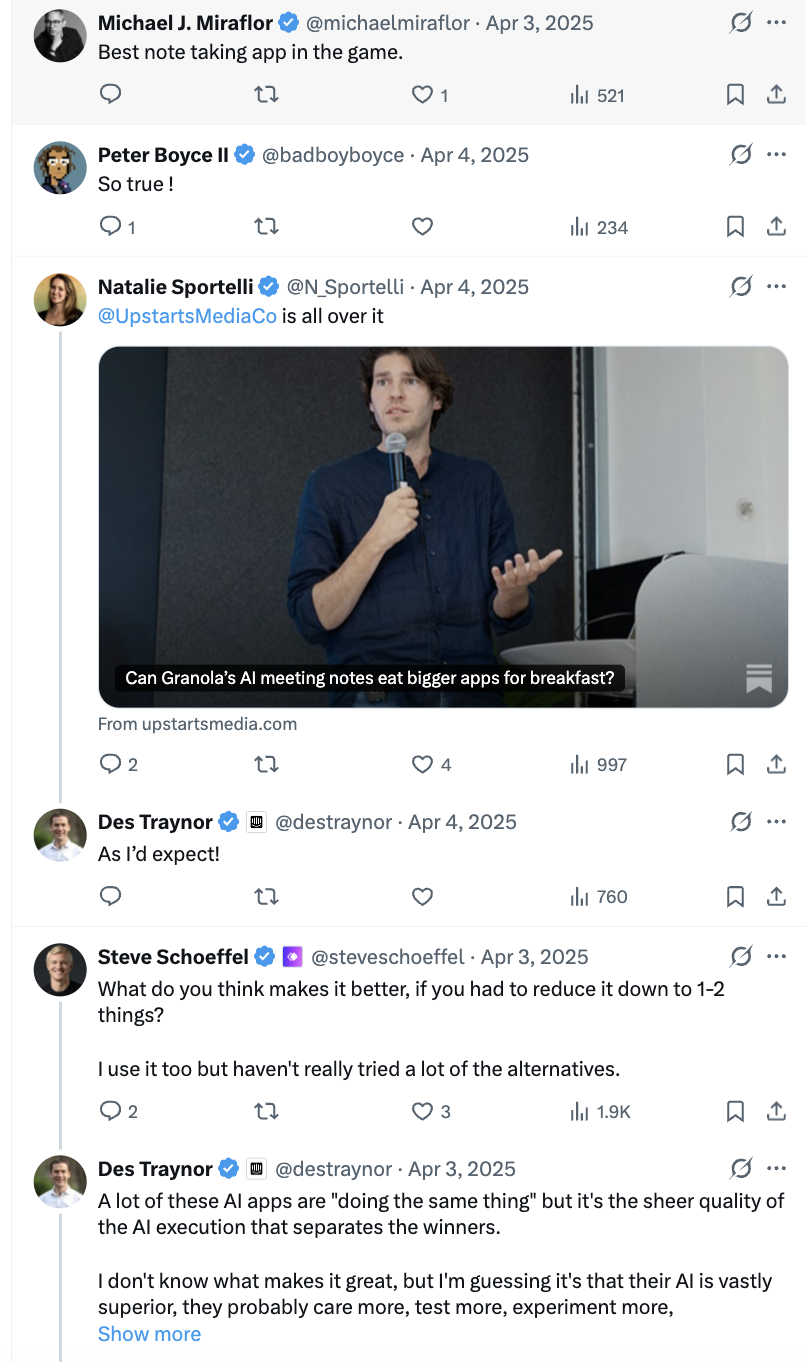
The replies quickly turned into a cascade of praise from other respected people in startup Twitter: "magical," "everyone I know uses this," "word of mouth is crazy strong." Over time, the thread evolved into something more nuanced, with users debating missing features, tradeoffs, and competing products.
Hive interpreted the thread primarily as coordinated promotion.
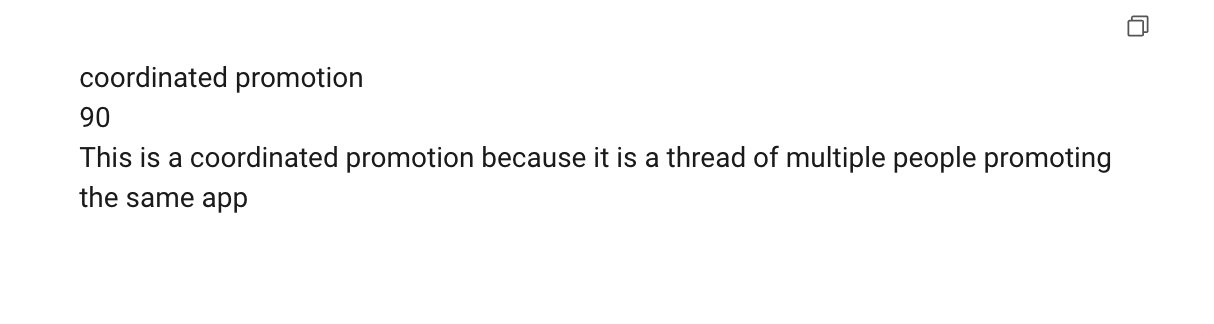
And honestly, you can see why. When a cluster of high-status accounts repeatedly recommends the same product inside a tightly connected community, it begins to resemble social amplification -- even if the enthusiasm is completely genuine.
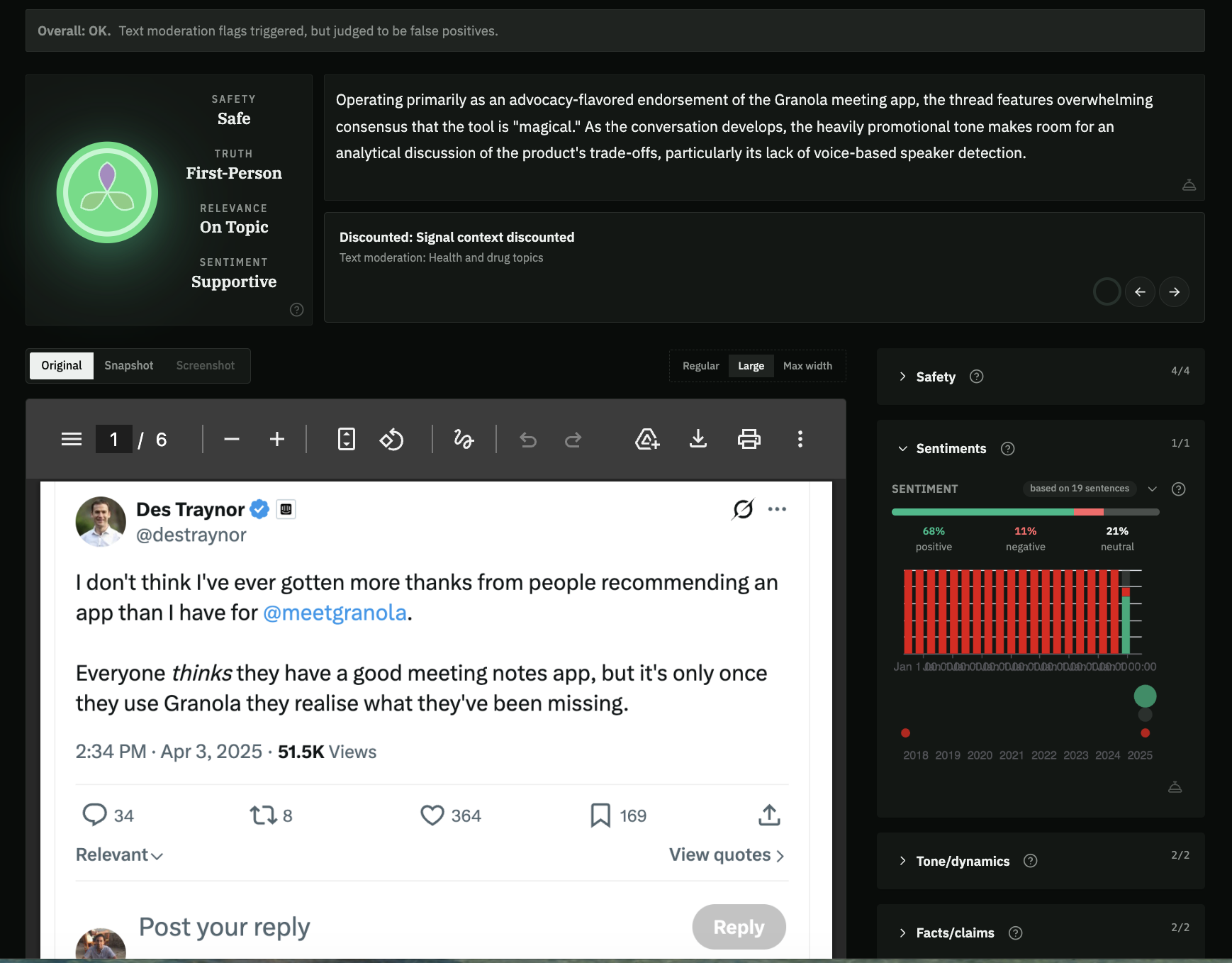
Our detection sandbox, Vibecheck, interpreted the thread differently: less like obvious coordination, and more like an "advocacy-flavored endorsement" driven by community enthusiasm, social proof, and gradually emerging nuance.
The Nextdoor thread had almost the exact same structure.
It began innocently enough: a neighbor asking for recommendations on solar panel installers. What followed was a flood of enthusiastic replies. Neighbors vouched for companies they had used, recommended specific reps by name, referenced friends and family experiences, and encouraged the original poster to DM them directly. One commenter even suggested dropping a utility bill into the thread so they could help estimate savings.
Mixed into the enthusiasm was one skeptical voice warning that the company was "a scheme."
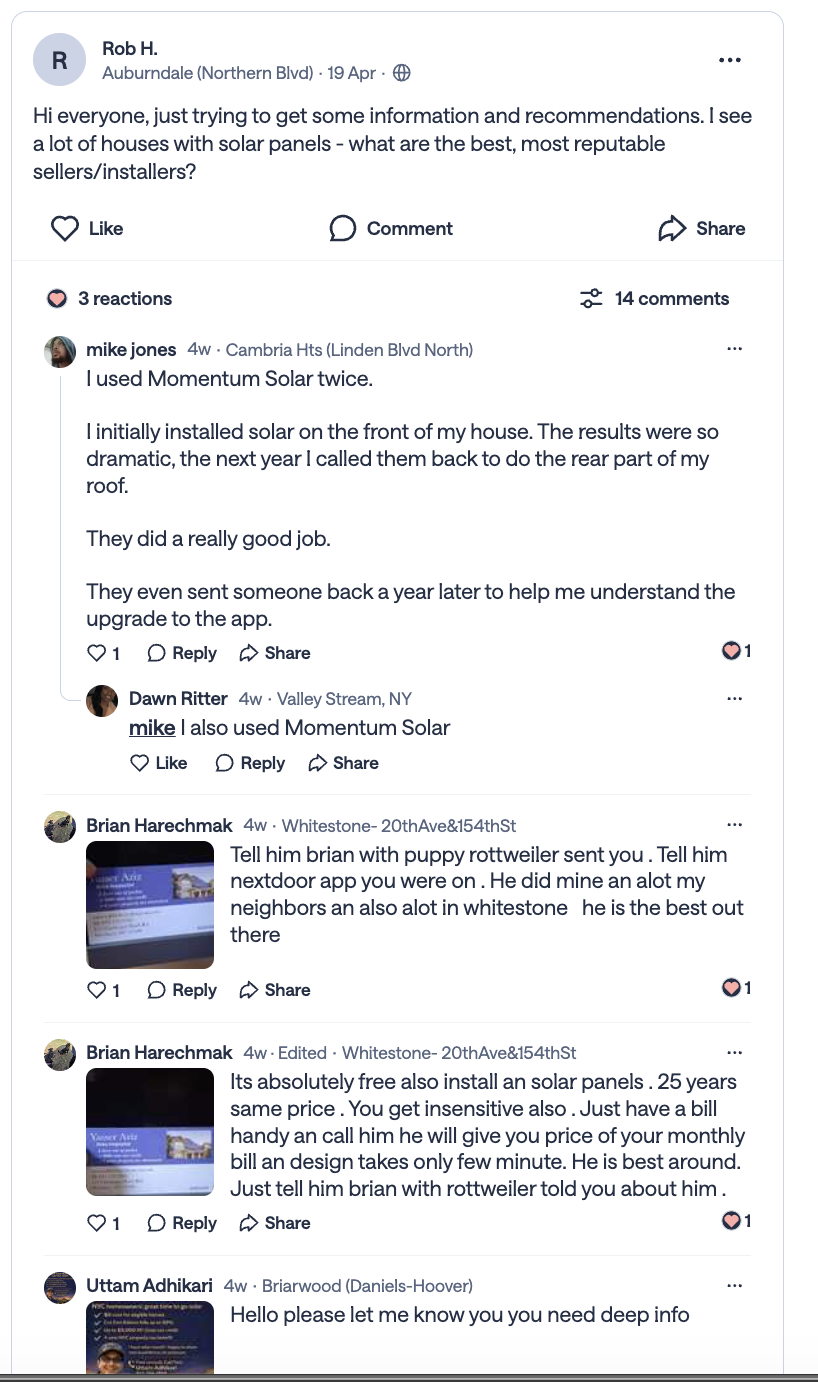
Again, nothing here necessarily meant the thread was fraudulent. That's exactly what made it interesting.
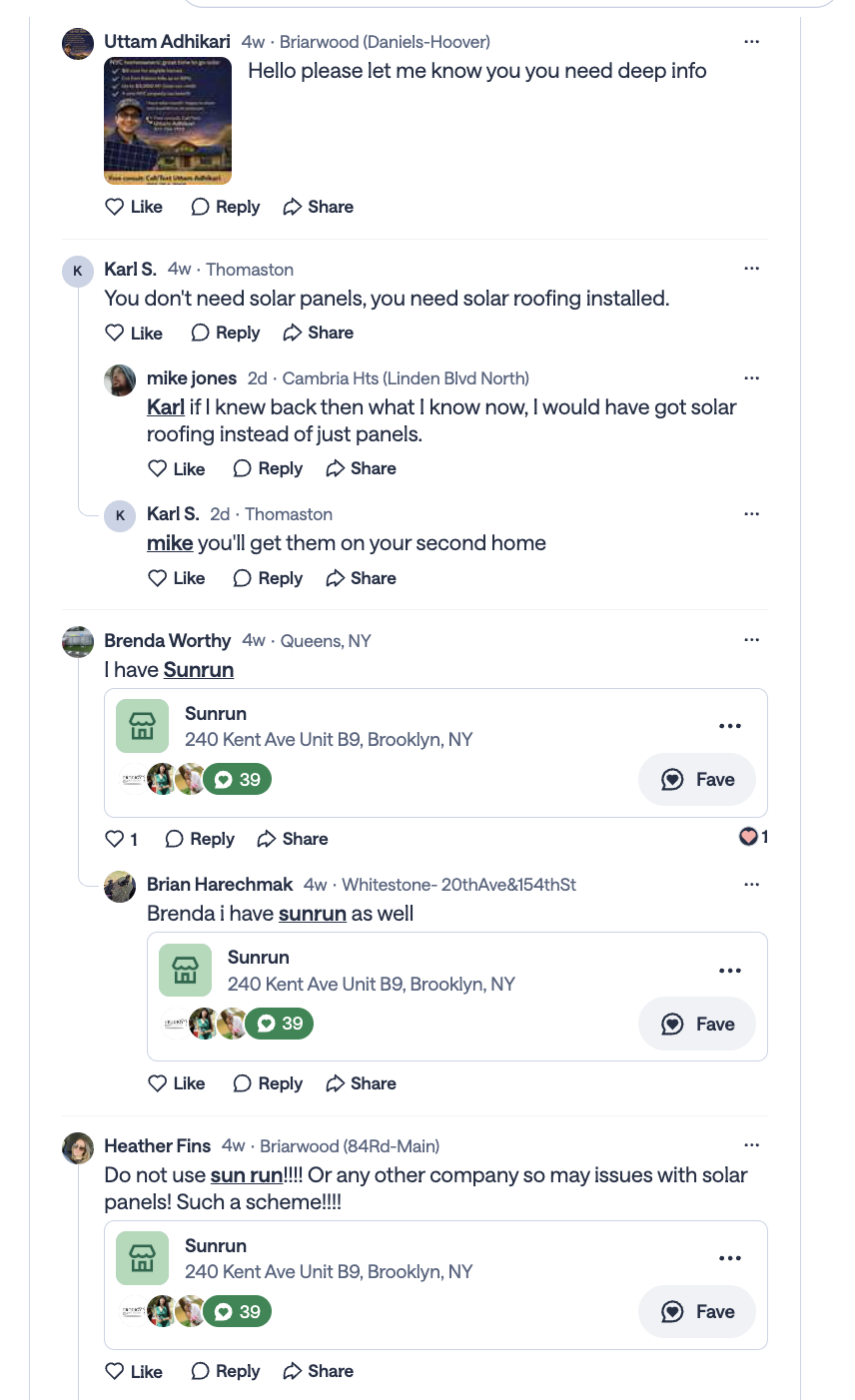
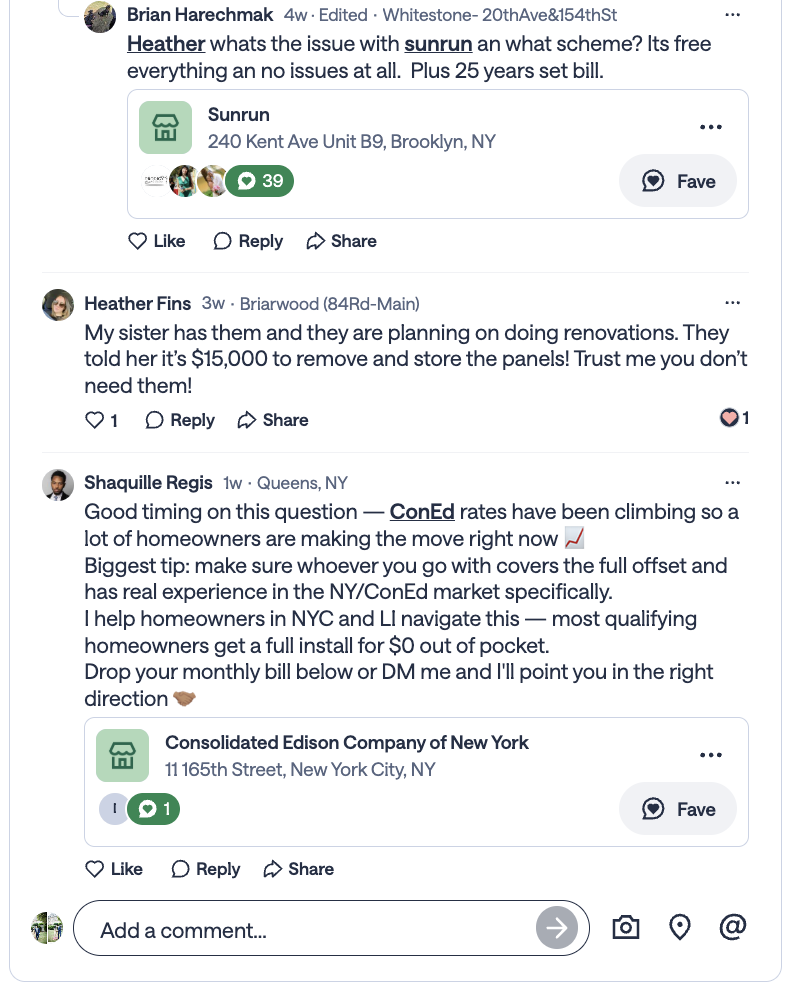
Recommendation, referral, solicitation, skepticism -- all mixed into the same thread.
Vibecheck described the conversation as "highly promotional," shaped by a blend of personal anecdotes, referral-style advocacy, professional solicitation, and emerging skepticism. Hive reached a similar conclusion, classifying the discussion as "a mix of organic and promotional behavior."
Both systems surfaced real signals, but the hardest question wasn't whether the conversations contained promotion.
It was how the communities themselves should interpret it.
As communities become more persistent, moderation stops being a simple "what is this content?" problem and becomes a harder "what's actually happening here?" problem.
The hardest questions increasingly aren't obvious spam or scams. They're gray-area trust problems: authentic recommendation or coordinated promotion? community enthusiasm or solicitation?
Those questions can't be answered from content classification alone. They require context, memory, reputation, and social interpretation -- the same things real communities rely on every day.